Beyond The Code
Don't just learn technology. Create it
Looking for an education at the cutting edge of technology, designed to shape the people who will shape the future? You’re in the right place.


Innovating in the present.
What is 42?
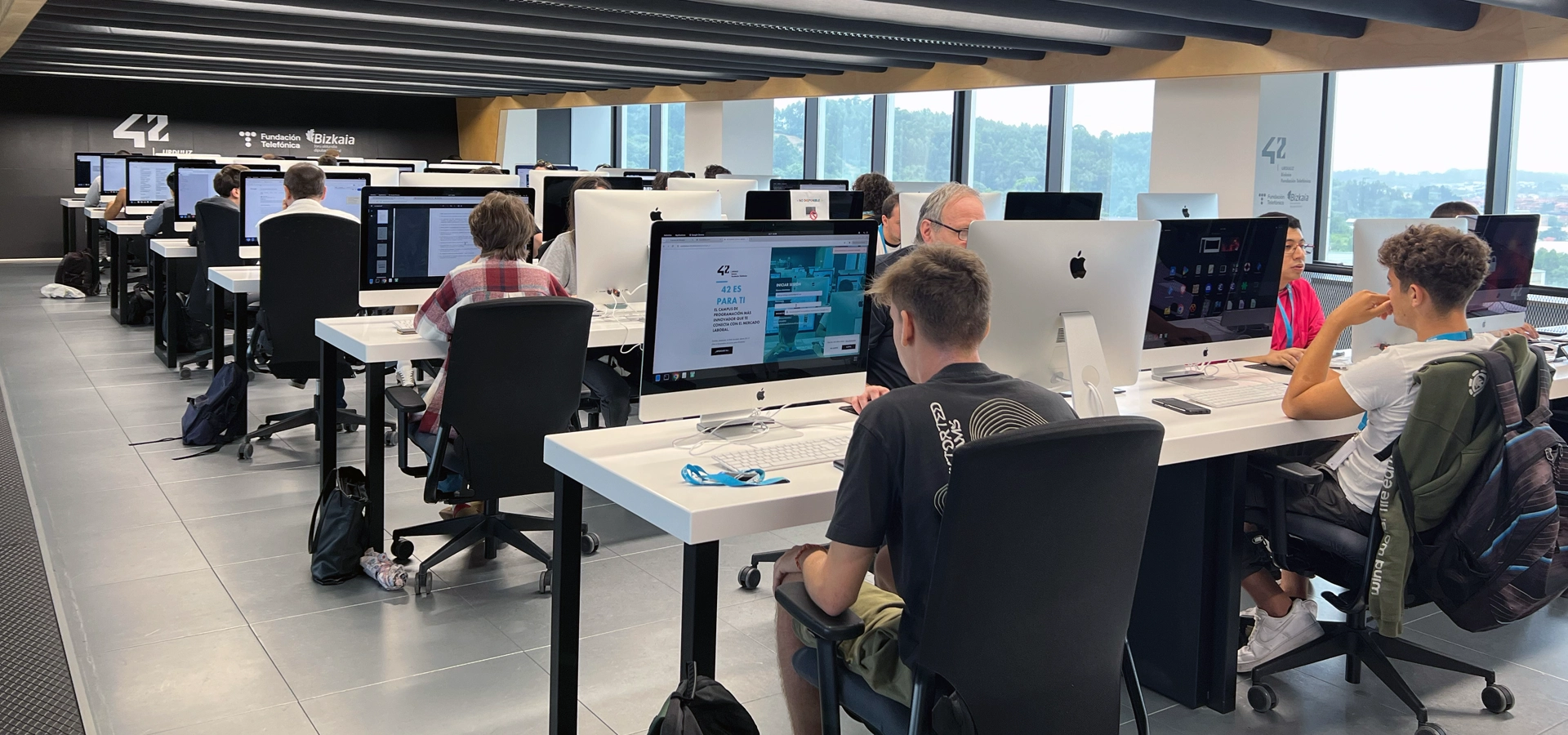
Artificial intelligence, cybersecurity, software development, data, the cloud and quantum computing are transforming the way we live and work. At 42, you don’t just come to learn how to code: you come to discover how the technology that will shape the future works, how it is designed, how it is trained and how it is developed.
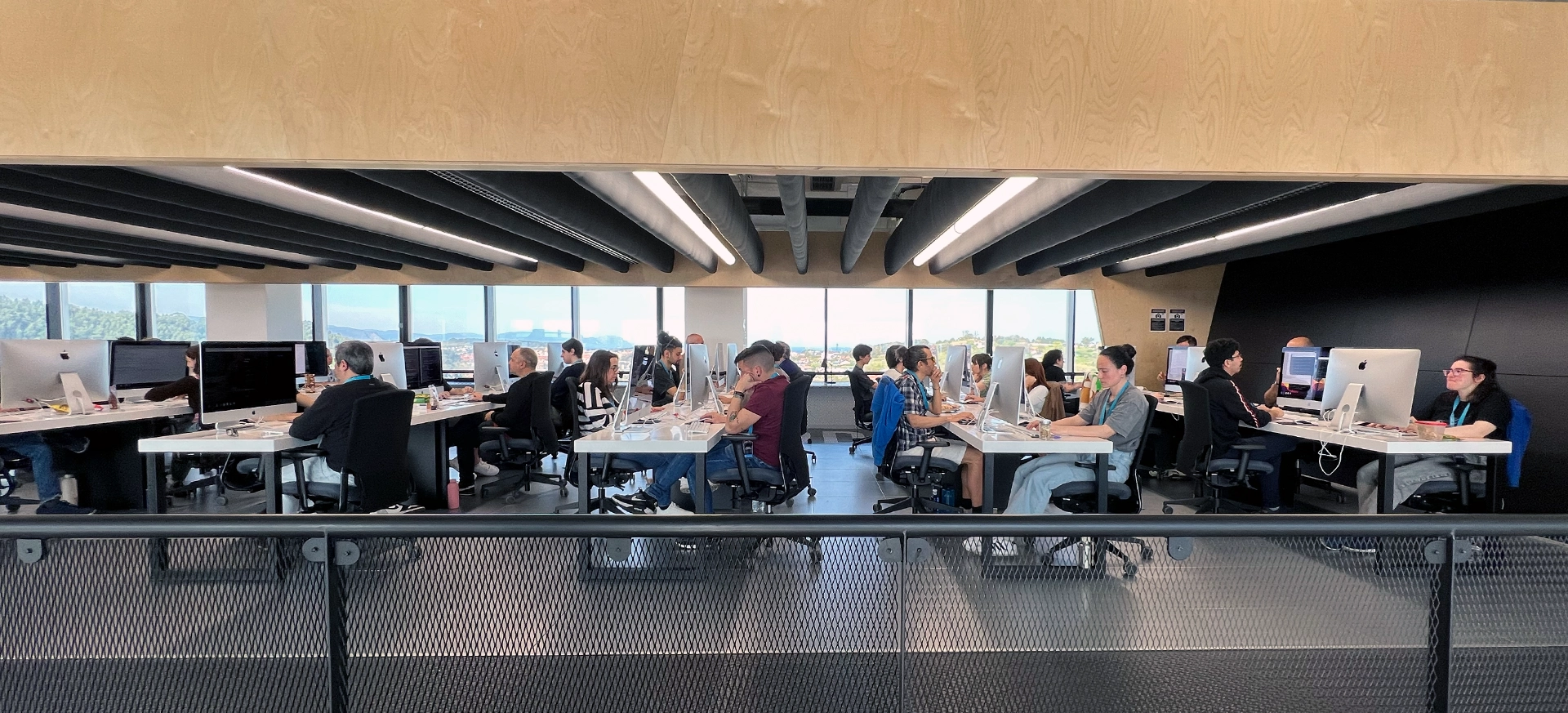
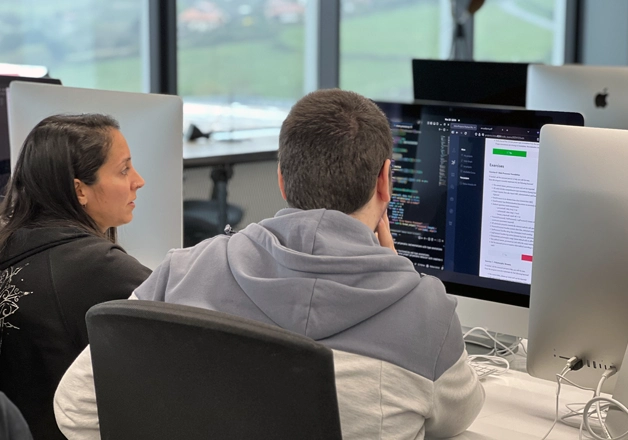
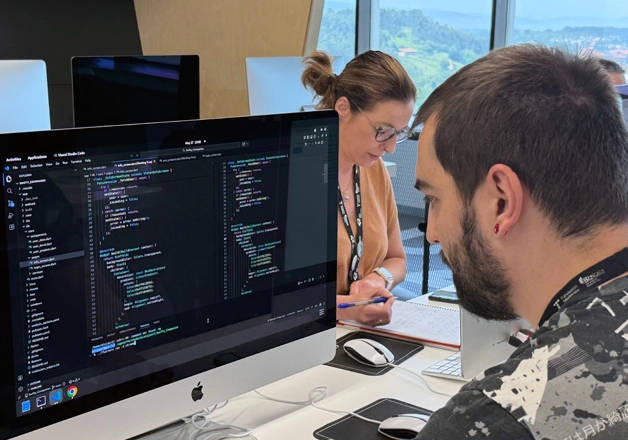
Here, you don’t just memorise theory or attend traditional lessons. You learn by doing, solving real-world challenges and working in teams with other students, through an innovative model based on peer learning that develops both technological skills and key abilities for any professional career: independence, creativity, resilience, adaptability to change and collaboration.
What’s more, the course is 100 per cent free, thanks to the support of the Telefónica Foundation and the Provincial Council of Bizkaia, and is open to anyone of legal age, with no prior experience in programming or computing required.
It’s not just us saying so. In 2026, 42 was recognised as Europe’s most innovative university by the WURI ranking, an international accolade for an educational model that breaks with convention to train the professionals needed by the digital economy.
If you’re looking for a different kind of training, connected to cutting-edge technologies and designed to prepare those who will build the future, 42 Urduliz Bizkaia is the place for you.
Find out more about how we learn at our campus in the Program.
Fancy finding out more about the campus before making a decision? There are various ways to do so…

- @4UrdulizFtef
- Urduliz Bizkaia
EDUCATIONAL EXPERIENCE WITHOUT LIMITS
A unique concept
Frequently asked questions
We’ve compiled some doubts, questions, and existential crises on a handy FAQ page.
You’ll need a place to sleep in and cover your daily costs (transport, allowances, etc.), which will be at your own expense, except for your studies at 42 which, as we mentioned, are 100% free of charge for students.
Once students have passed the ‘pool’ stage, they follow a core curriculum across all campuses worldwide, alongside a technical specialisation component. The learning pathway consists of 21 levels.
The first part, the ‘Common Core’, comprises seven layers of projects and exams, focusing primarily on learning C, Python and JavaScript. Once the final layer has been completed, students become eligible for their first work placement. From this point onwards, it is up to the student to decide when to undertake it.
The second part focuses on the areas of specialisation that each student wishes to develop at their campus. Topics covered include: cybersecurity, web development, programming, AI, blockchain, DevOps, etc. This content is constantly updated to keep pace with developments in the technology sector.
Any person of legal age can submit an application to the campus. There’s no age limit.
During the ‘Common Core’, you will learn C, Python and JavaScript, and you will explore general-purpose artificial intelligence, RAG and intelligent agents.
In the specialisation, the programming languages depend entirely on the projects you are working on.
Everyone is welcome at 42, but we don’t recommend training to students before they’re of legal age to prevent them from dropping out of secondary school.
It is a universally applicable programming language, highly compatible with hardware compared to others. By working with C, you develop a deep understanding of computers and their operating systems and learn how applications affect these systems. With the knowledge and insight gained from programming in C, it is often easier to learn other languages later on.
Up to a maximum of four and a half years on average, with the first part – the ‘Common Core’ – lasting between 12 and 18 months.
Artificial Intelligence is not an optional extra or a mere add-on; rather, it is woven throughout 42’s learning curriculum, ranging from fundamental concepts to the creation of architectures for fully autonomous systems. AI is integrated by design and in a progressive manner, not simply to follow a trend. The aim is that, upon completing your studies, you will be able to design, develop and critically evaluate AI-integrated solutions to address the current challenges facing the industry.
The training at 42 is intensive. It isn’t advisable to have a full-time job. Part-time work is more reasonable, but it requires a large degree of personal discipline.
You progress through the study plan by completing projects and earning points. With these points you go up through the levels and unlock more projects and branches of specialisation. You can also master different skills and complete missions and achievements.